
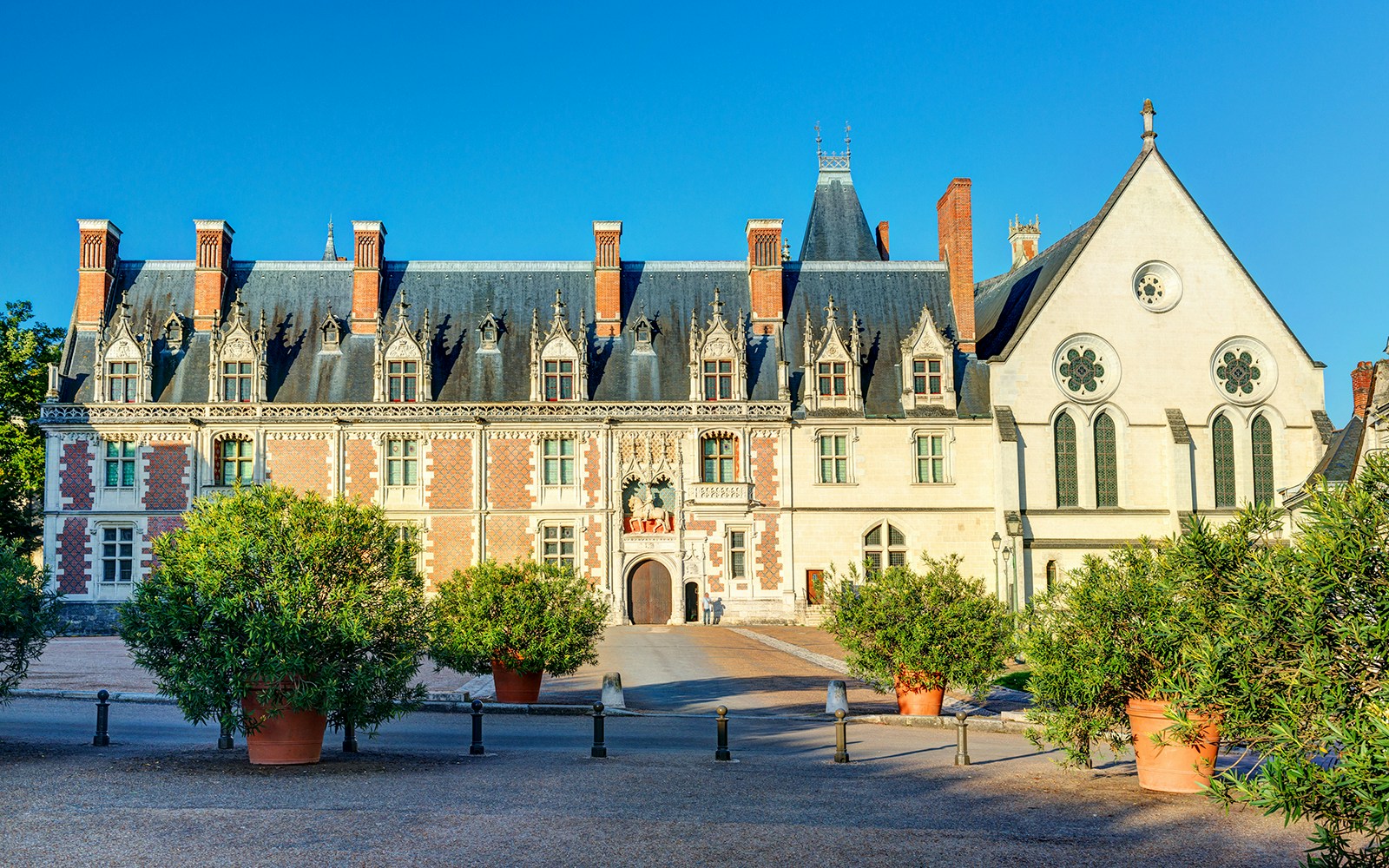
Château de Blois is like an architectural timeline in stone. Its different wings show how French design evolved from the medieval fortress of the Counts of Blois to the Gothic elegance of Louis XII, the Renaissance ambition of Francis I, and the classical style of Gaston d’Orléans.
Blois Royal Castle & Gardens Tickets

Audio guide
Amboise Royal Castle & Gardens Tickets
Extended validity
Sound and Light Show at Royal Blois Castle with Skip-the-Line Tickets
Extended validity
Audio guide
Royal Blois Castle + 1 Loire Valley Castle Combo
Extended validity
Why visit Château de Blois?
If there’s one château where French royal history feels layered into every wall, it’s Château de Blois. Instead of one single style or story, you get a dramatic mix of medieval, Gothic, Renaissance, and classical architecture shaped by kings, queens, power struggles, and court life.
Walk through four centuries of architecture
See the famous Francis I staircase
The château’s most iconic feature is the spiral staircase in the Francis I wing. Open to the courtyard and richly carved, it was designed to impress visitors and show off the power, taste, and Renaissance influence of the French court.
Step inside royal apartments
Explore furnished rooms linked to major royal figures, including Louis XII, Francis I, Catherine de’ Medici, and Henry III. Tapestries, painted ceilings, fireplaces, and decorative details help bring the château’s courtly past to life.
Stand where royal drama unfolded
Château de Blois was the setting for one of France’s most dramatic political episodes: the assassination of the Duke of Guise in 1588, ordered by King Henry III. The château still carries the atmosphere of royal intrigue, ambition, and conflict.
Highlights of Château de Blois
Francis I staircase
See the château’s most famous feature: an open spiral staircase carved into the Renaissance wing. Its sculpted details and courtyard-facing design made it both a practical passageway and a royal statement piece.


Château de Blois’ architectural evolution
Château de Blois grew over several centuries, which is why it feels more like an architectural timeline than a single-style château. It began as a medieval fortress for the Counts of Blois, with defensive structures built around a strategic site above the Loire.
In the late 15th century, King Louis XII transformed Blois into a royal residence, adding the red-brick and stone Gothic wing that still frames the courtyard today. Under Francis I, the château took on a bold Renaissance identity, with carved façades, Italian-inspired details, royal emblems, and the famous open spiral staircase. In the 17th century, Gaston d’Orléans added a classical wing, bringing symmetry, columns, and a more formal style to the château. Today, Château de Blois stands out because these different phases remain visible together: medieval foundations, Gothic elegance, Renaissance drama, and classical order in one royal complex.
History of Château de Blois
- 9th–10th century – The site developed as a fortified stronghold under the Counts of Blois, giving the château its early medieval roots.
- 13th century – The Salle des États Généraux was built, becoming one of the château’s oldest surviving rooms and an important ceremonial hall.
- 1498 – Louis XII, born in Blois, became King of France and made the château a major royal residence.
- Late 15th–early 16th century – Louis XII built the Gothic wing, marked by red brick, white stone, arcades, and the equestrian statue above the entrance.
- 1515 onwards – Francis I expanded the château with a Renaissance wing, including the famous spiral staircase and richly carved façades.
- 1588 – The Duke of Guise was assassinated at Château de Blois on the orders of King Henry III, making the château a key site in the French Wars of Religion.
- 17th century – Gaston d’Orléans began a new classical wing, designed by François Mansart, but the project remained unfinished.
- French Revolution – The château was damaged, stripped, and used for military purposes, putting much of its heritage at risk.
- 19th century – Major restoration work helped preserve the château and revive its royal apartments, façades, and historic rooms.
- Today – Château de Blois is a major Loire Valley landmark, known for its mix of architectural styles, royal apartments, Fine Arts Museum, and dramatic links to French history.
Frequently asked questions about Château de Blois
Château de Blois is famous for its four distinct architectural styles, royal apartments, Francis I staircase, and its role in French royal history.
Several French kings and queens lived or stayed at Château de Blois, including Louis XII, Francis I, Catherine de’ Medici, and Henry III.
The most famous feature is the Francis I staircase, an open spiral staircase with rich Renaissance carvings overlooking the courtyard.
Château de Blois was a major royal residence and the setting for key political events, including the assassination of the Duke of Guise in 1588.
Inside, you can explore royal apartments, the King’s Chamber, Queen’s Chamber, Salle des États Généraux, decorative ceilings, fireplaces, tapestries, and the Fine Arts Museum.
Yes, Château de Blois is one of the major Loire Valley castles and is especially known for showing the evolution of French château architecture.