Hours, directions, entrances, and the best time to arrive
Château Royal de Blois visitor guide
Château Royal de Blois is a royal château in the center of Blois, best known for packing several centuries of French court history into one compact visit. This is not a single-showpiece castle where you walk in, snap the façade, and leave — the real payoff is in how the courtyard, apartments, museum rooms, and major ceremonial spaces fit together. Most visits feel manageable at 1.5–2.5 hours, but they work much better if you start with the courtyard and use the HistoPad from the beginning. This guide covers timing, entry, route, and the spaces worth slowing down for.
Quick overview: Château Royal de Blois at a glance
If you want the short version before you book, these are the decisions that make the biggest difference.
- When to visit: The château is generally open daily from 9am–6:30pm in April–September and 10am–5pm in October–March; the first hour after opening is noticeably calmer than late morning and early afternoon, when day-trippers and group visitors start filling the apartments.
- Getting in: Standard château entry covers the main visit, and guided visits, Sound & Light tickets, and château combos are also available; you don’t need to reserve a date or time slot for the château itself, but advance tickets still make arrival simpler because security checks apply to everyone.
- How long to allow: 1.5–2.5 hours works for most visitors, and adding the evening Sound & Light show or Maison de la Magie easily turns it into a half-day or full-day Blois plan.
- What most people miss: The Fine Arts Museum rooms are easy to rush past after the apartments, and the Estates General room deserves more time than most visitors give it.
- Is a guide worth it? Yes, if you care about court politics, architecture, and how the four building periods fit together; otherwise, the included HistoPad does enough for a strong self-guided visit.
🎟️ Tickets for Château Royal de Blois are easiest to sort out before you arrive, especially if you want a guided visit, a combo, or the seasonal evening show. See ticket options
Jump to what you need
🕒 Where and when to go
🗓️ How much time do you need?
Visit lengths, suggested routes, and how to plan around your time
🎟️ Which ticket is right for you?
Compare all entry options, tours, and special experiences
🗺️ Getting around
How the château is laid out and the route that makes most sense
🏰 What to see
Courtyard façades, Royal Apartments, and the Estates General Room
♿ Facilities and accessibility
Restrooms, parking, accessibility details, and family services
Where and when to go
How do you get to Château Royal de Blois?
The château sits in the center of Blois, a short uphill walk from Blois-Chambord station and easy to reach without a car.
6 Place du Château, 41000 Blois
- Train: Blois-Chambord station → 8-minute walk → the easiest no-car option for most visitors.
- Bus: Stop at the foot of the château → shortest approach if you want to avoid the uphill walk.
- Car: Public parking is available nearby, including Parking du Château on Avenue Jean-Laigret → useful for Loire Valley château-hopping days.
- Bike: Bicycle parking is available at the foot of the château and on the square → practical if you’re riding part of the Loire à Vélo route.
Which entrance should you use?
Entry is straightforward here: most visitors arrive from Place du Château, then join the same access flow for ticket scanning and security. The mistake people make is assuming an advance ticket means they can skip checks.
- Main entrance: Located on Place du Château. Best for all visitors, including e-ticket holders and on-the-day buyers; the real delay is security, not ticket type.
When is Château Royal de Blois open?
- April–September: 9am–6:30pm
- October–March: 10am–5pm
- January 1 and December 25: Closed
- Last entry: 30 minutes before closing
When is it busiest? Late morning to mid-afternoon is usually the most crowded, especially on weekends, school-vacation dates, and evenings when visitors are also lining up for the Sound & Light show.
When should you actually go? Go right after opening if you want quieter royal apartments, faster HistoPad pick-up, and more space to read the courtyard architecture before groups arrive.
How much time do you need?
| Visit type | Route | Duration | Walking distance | What you get |
|---|---|---|---|---|
Highlights only | Courtyard → Royal Apartments → exit | 1–1.5 hrs | ~1 km | You get the château’s core spaces and best architectural overview, but you’ll likely rush past the museum rooms and miss some of the deeper court context. |
Balanced visit | Courtyard → Royal Apartments → Estates General room → Fine Arts Museum rooms | 1.5–2.5 hrs | ~1.5 km | This is the best fit for most visitors because it covers the courtyard, apartments, political spaces, and museum rooms without turning the visit into a slog. |
Full exploration | Courtyard → Royal Apartments → Queen’s Chamber → Estates General room → Fine Arts Museum rooms + HistoPad-led stops | 3+ hrs | ~2 km | This gives you time to use the HistoPad properly, and treat the museum as part of the visit rather than an afterthought, but it needs more focus and stamina than most visitors expect. |
Which Château Royal de Blois ticket is best for you
| Ticket type | What's included | Best for |
|---|---|---|
Standard château entry | Royal apartments + Fine Arts Museum + courtyard route + HistoPad | A first visit where you want the full château at your own pace without committing to a guided group schedule. |
Guided château visit | Courtyard + royal apartments + live guide | A visit where the history matters more than flexibility, and you don’t want to piece together the court story room by room yourself. |
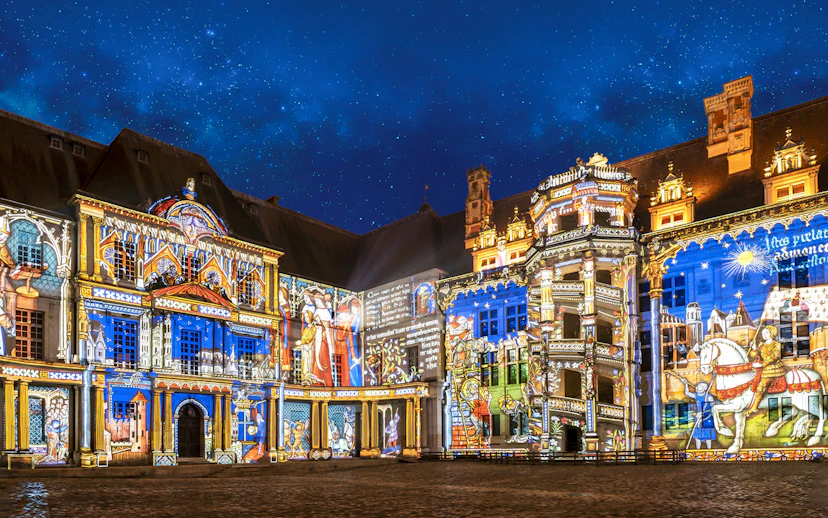
Château + Sound & Light | Daytime château access + 45-minute courtyard projection show | A Blois stay where you want the château in daylight and then want to see the façades used as the evening stage. |
Château + House of Magic combo | Château access + Maison de la Magie entry | A short Blois day where you want a second stop nearby and don’t want to spend the whole day inside one historic site. |
How do you get around Château Royal de Blois?
The château route
Château Royal de Blois is best explored on foot, and most visitors can cover the core route in 1.5–2.5 hours without feeling rushed. The main courtyard is the orientation point that makes the rest of the visit click, so it’s worth pausing there before you head indoors.
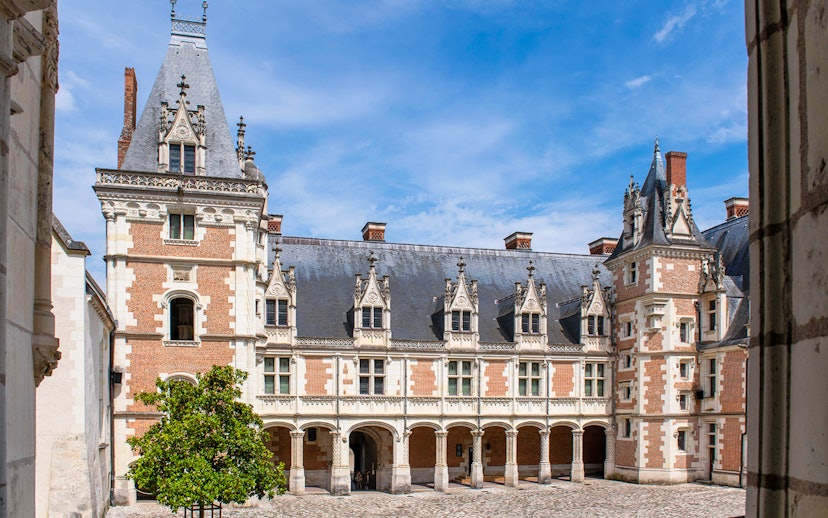
- Main courtyard: Four architectural periods in one enclosed space → spend 15–20 minutes here before entering the rooms.
- Royal Apartments: The heart of the visit, with the court-life rooms and decorative interiors → budget 45–60 minutes.
- Queen’s Chamber: One of the most important apartment spaces, including the portrait of Antonietta Gonsalvus → spend 10 minutes.
- Estates General room: The château’s largest room at 540m² → allow 10–15 minutes because it’s easy to under-visit.
- Fine Arts Museum rooms: Nine rooms with paintings, sculpture, and quieter highlights → budget 20–30 minutes.
Suggested route: Start in the courtyard, then do the royal apartments, then the Estates General room, and leave enough energy for the museum rooms at the end — that’s the section most visitors cut short once they feel they’ve ‘done the castle.’
Maps and navigation tools
- Map: The HistoPad works as the most useful in-visit tool because it combines digital reconstructions with route help; pick it up as soon as you enter.
- Signage: The main route is manageable on its own, but the HistoPad makes the interiors easier to understand and helps stop the visit from feeling like a sequence of disconnected rooms.
- Audio guide / app: The HistoPad adds real value over a bare self-guided walk because Blois is about reconstruction, missing décor, and court context as much as what still survives physically.
💡 Pro tip: Don’t rush straight indoors. If you spend 10 minutes decoding the courtyard first, the rest of the château makes far more sense and the later rooms feel connected instead of random.
What are the most significant spaces in Château Royal de Blois?

1/6
Courtyard and façades
Era: Middle Ages to 17th century
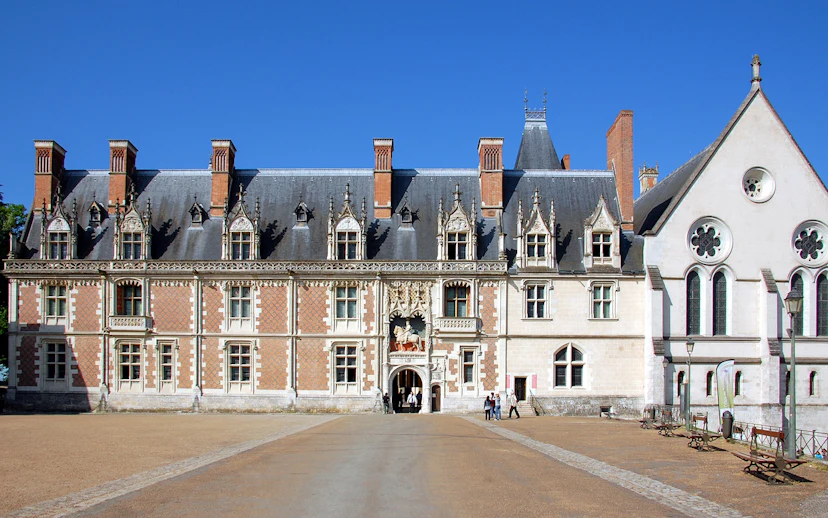
This is the single best place to understand why Blois feels different from other Loire castles: you’re looking at several royal building campaigns at once, not one uniform residence. Most visitors photograph it quickly and move on, but the real point is how the styles sit side by side. Slow down long enough to read the shifts in architecture before heading indoors.
Where to find it: Immediately after entering from Place du Château, in the main central courtyard.
Royal Apartments
Attribute: Historic royal interiors
These rooms are the core of the château visit and the reason a quick façade stop sells Blois short. The route gives you the court-life spaces that tie the building to the kings and queens who lived here, and the HistoPad helps reconstruct décor that no longer survives in full. What many visitors miss is how much richer the rooms become once you stop using them as photo backdrops and start following the sequence.
Where to find it: On the main visitor route leading directly off the courtyard.
Queen’s Chamber
Attribute: Renaissance court space
The Queen’s Chamber is one of the most rewarding individual rooms because it combines court atmosphere with one of the château’s standout artworks. The portrait of Antonietta Gonsalvus is the detail many people walk past too quickly, even though it’s one of the most unusual and memorable works on site. This is a room worth reading, not just scanning.
Where to find it: In the François I wing, along the Royal Apartments route.
Estates General room
Attribute: Ceremonial and political space
At 540m², this is the largest room in the château, and it lands differently from the more intimate apartments. It matters because Blois is not only about domestic royal life — it is also about power, ceremony, and state. Many visitors shorten this stop because they’ve already spent their attention in the apartments, but it deserves its own pause.
Where to find it: On the château itinerary as one of the major ‘other spaces’ beyond the apartments.
Fine Arts Museum Room 1
Attribute: Artist / workshop: Marco d’Oggiono
If you like Renaissance painting, this room is one of the best reasons not to skip the museum section. It includes an altarpiece by Marco d’Oggiono, tied to Leonardo’s workshop influence, and it shifts the visit from architecture and court history into art history. Most people reach the museum late and rush through, which is exactly why Room 1 gets under-seen.
Where to find it: Fine Arts Museum, Room 1, on the museum portion of the château route.
Fine Arts Museum Room 7
Attribute: Artist: Eugène Gervais
Room 7 is a quieter stop, but it helps anchor the château in Blois itself rather than just in royal history. Eugène Gervais’ Blois cityscape is the kind of work many visitors drift past because it doesn’t have the immediate fame of the apartments, yet it gives the visit a local dimension that the main narrative sometimes skips.
Where to find it: Fine Arts Museum, Room 7, toward the later part of the museum route.
Facilities and accessibility
- 🎟️ Ticket scanning: E-tickets are accepted onsite, so you don’t need to print before you arrive.
- 🔎 Security checks: Bag and person checks take place at the entrance, so keep your items compact and easy to inspect.
- 🅿️ Parking: Public parking is available near the château, including Parking du Château on Avenue Jean-Laigret, which is useful if Blois is one stop on a wider Loire Valley day.
- 🚲 Bicycle parking: Bicycle parking is available at the foot of the château and on the square, which makes Blois one of the easier château stops to fold into a cycling itinerary.
- 🚌 Bus access: A bus stop sits at the foot of the château, which is the easiest final approach if you want to avoid the walk up from the station area.
- ♿ Mobility: Accessibility is partial rather than full — wheelchair users can reach the porch, courtyard, chapel, terrace, and first-floor architectural rooms in the François I wing via inclined planes, but not the entire historic route.
- 👁️ Visual impairments: The visit depends heavily on seeing interiors, paintings, and digital reconstructions, so it’s worth asking staff on arrival which parts of the route are easiest to navigate with assistance.
- 🧠 Cognitive and sensory needs: The HistoPad helps break the visit into clearer stages and makes the route easier to follow than a signage-only visit.
- 👨👩👧 Families and strollers: The courtyard and main circulation areas are the simplest parts of the site with a stroller, but you shouldn’t expect every section of the historic route to feel equally pushchair-friendly.
Château Royal de Blois works best for children who can handle a history-heavy visit with a digital layer, and it gets much stronger when you pair it with Maison de la Magie across the square.
- 🕐 Time: Around 1.5 hours is realistic with younger children if you focus on the courtyard, a shorter apartment route, and the HistoPad rather than trying to read every room.
- 🏠 Facilities: The easiest reset point is the courtyard, where children get a visual break before you continue indoors.
- 💡 Engagement: Start with the courtyard and let the HistoPad do the explaining early — children usually connect better once they can picture what the lost interiors looked like.
- 🎒 Logistics: Bring only a small bag because bulky items slow entry and aren’t allowed inside.
- 📍 After your visit: Maison de la Magie is directly opposite the château and is the simplest child-friendly second stop in Blois.
Rules and restrictions
What you need to know before you go
- Entry requirement: You can visit without booking a date or timed slot for the château, and tickets are scanned onsite when you arrive.
- Bag policy: Bulky backpacks and oversized items are not permitted inside, so travel light if you’re arriving straight from the station.
- Re-entry planning: Don’t plan your day around stepping in and out casually — it’s easier to finish the château visit first, then head into town for food or the next stop.
Not allowed
- 🚫 Food and drink: Glassware, glass bottles, and alcoholic beverages are prohibited at the entrance.
- 🐾 Pets: Only service animals should be assumed to have access, so check ahead before arriving with an animal.
- 🖐️ Sharp items: Sharp objects are prohibited, which matters most if you’re arriving with picnic gear, cycling equipment, or luggage from a longer Loire Valley day.
Photography
Photography rules are best checked room by room once you’re inside. Blois combines historic interiors, museum spaces, and seasonal evening projections, so don’t assume the same policy applies everywhere, and treat flash, tripods, and other specialist equipment as something to confirm before you use.
Practical tips
- Booking and arrival: You don’t need a timed slot for the château, but arriving 15–20 minutes early still helps because everyone goes through security and bag checks.
- Pacing: Start in the courtyard before the apartments — Blois makes much more sense once you’ve seen the four architectural periods in one view.
- Crowd management: The first hour after opening is the sweet spot here because the apartments feel calmer and the visit is easier before group traffic builds in late morning.
- What to bring or leave behind: Bring a small bag only; bulky backpacks, glass bottles, alcohol, and sharp objects will slow you down or keep you out.
- Route planning: If you’re coming from Paris, make Blois the anchor of the day rather than trying to force Chambord, Cheverny, and Blois into one rushed itinerary.
- Family strategy: The château is better with children if you pair it with Maison de la Magie across the square, instead of expecting one long history visit to carry the whole day.
- Evening timing: Only add the Sound & Light show if you’re staying in Blois or can return after dark, because it works as a second chapter to the day, not as a quick add-on before leaving town.
What else is worth visiting nearby?
Commonly Paired: Maison de la Magie
Distance: 0.1km — 1-minute walk
Why people combine them: It’s directly opposite the château, so it turns Blois into an easy two-stop day and makes much more sense than forcing a second major château into the same time block.
Commonly Paired: Old Blois town
Distance: 0.2km — 3-minute walk
Why people combine them: The château visit drops naturally into Blois’s historic streets, gardens, and river-town atmosphere, so it’s the easiest way to extend the day without adding more ticket logistics.
Also nearby
Château de Chambord
Distance: About 20km — roughly 30–40 minutes by car or shuttle
Worth knowing: It’s the strongest bigger-castle add-on from Blois, but it works best as a separate second stop rather than something you tack on without transport planning.
Château de Cheverny
Distance: About 18km — roughly 25–35 minutes by car
Worth knowing: Cheverny is a smoother pairing if you want another Loire château with less scale pressure than Chambord and a more manageable same-day rhythm.
Eat, shop and stay near Château Royal de Blois
- On-site: Food options at the château itself can vary, so it’s safer to treat nearby Blois cafés and restaurants as your actual meal plan.
- Place du Château cafés (1–3-minute walk, around Place du Château): Coffee, pastries, and light lunches that work well before entry or after the visit when you don’t want a long sit-down meal.
- Rue du Commerce spots (5–8-minute walk, central Blois): Better value for a proper lunch, with more choice than the immediate square and an easier fit if you’re continuing through town afterward.
- Loire-side restaurants (10–15-minute walk, lower town near the river): Best if you want the château to be the start of a slower Blois afternoon rather than a quick stop between trains.
- 💡 Pro tip: Eat after the château, not before, if you want the quietest rooms — the first hour after opening is the calmest part of the day, and cafés in town are easier once the morning rush has passed.
- Château-area book and souvenir shops: The best buys near Blois are usually books, regional souvenirs, and smaller take-home items that fit easily into a day bag.
- Central Blois shopping streets: If you want more than standard souvenirs, head a few minutes into town rather than limiting yourself to the immediate square.
Yes — if you want a walkable château visit and the evening Sound & Light show, staying in central Blois makes the day much easier. The area is practical rather than glamorous, but that’s part of the appeal: you can walk from the station, do the château without a car, eat nearby, and return for the night show without extra transport.
- Price point: Central Blois is usually more moderate than the Loire Valley’s most in-demand château bases, which helps if you want one or two nights without paying for a resort-style stay.
- Best for: Short stays built around Blois itself, car-free travelers, and anyone who wants to add the Sound & Light show without worrying about getting back after dark.
- Consider instead: Tours or Orléans work better if you want a larger city base, more evening options, or a wider regional itinerary beyond Blois.
Frequently asked questions about visiting Château Royal de Blois
Most visits take 1.5–2.5 hours. That covers the courtyard, royal apartments, Fine Arts Museum rooms, and the Estates General room at a comfortable pace. If you use the HistoPad carefully, stop for photos, or add Maison de la Magie or the evening Sound & Light show, your day in Blois will stretch well beyond that.
No, you don’t need to reserve a date or timed slot for the château itself. You can still book in advance to avoid ticket-purchase friction on arrival, but all visitors go through the same entrance checks, so advance booking helps with convenience more than queue-skipping.
Only partly, because the real bottleneck here is security, not ticket purchase. An advance ticket can save a little time at the entrance, but it won’t let you bypass bag and person checks, so don’t expect the kind of time savings you get at much busier landmark sites.
Aim to arrive 15–20 minutes before you want to start visiting. That gives you enough time for ticket scanning, security, and collecting the HistoPad without eating into your visit, especially if you’re trying to get in during the quieter first hour after opening.
Yes, but keep it small. Bulky backpacks and oversized items aren’t permitted inside, and the château also prohibits sharp objects, glassware, glass bottles, and alcoholic beverages, so packing light makes arrival much smoother.
Usually, yes for a standard personal visit, but you should still check posted room-by-room rules once you’re inside. Blois includes historic interiors, museum areas, and seasonal evening projections, so don’t assume flash, tripods, or other equipment are automatically allowed everywhere.
Yes, group visits are a good fit here, especially if you want the court-history context explained clearly. Official guided group formats are typically around 1–1.25 hours, which works well if your priority is the courtyard and apartments rather than a fully self-paced museum visit.
Yes, especially if you use the HistoPad and keep expectations realistic. The château itself is still a history-heavy visit, so many families get the best day by pairing it with Maison de la Magie directly opposite rather than expecting children to stay engaged through every interior room.
It is partially accessible, not fully. Wheelchair users can access the porch, courtyard, chapel, terrace, and first-floor architectural rooms in the François I wing via inclined planes, but the complete historic route is not step-free, so it’s worth checking the accessible route before you go.
Yes, there are easy food options near the château in central Blois. The safest plan is to eat in town before or after your visit rather than relying on onsite operations, especially if you want a proper meal or you’re trying to keep the first hour after opening free for the château itself.
Yes, you can, and Blois is one of the easier Loire château visits to do without a car. The key is to keep the itinerary light — Blois works well as the main stop of the day, but it starts to feel rushed if you try to combine it with too many other castles.
Yes, if you’re staying in Blois overnight or can return after dark. It’s a 45-minute courtyard projection show, so it feels like a real second experience rather than a minor add-on, but it’s much less practical if you’re on a tight same-day schedule back to Paris.