Hours, directions, entrances, and the best time to arrive
How to visit Château Royal d’Amboise
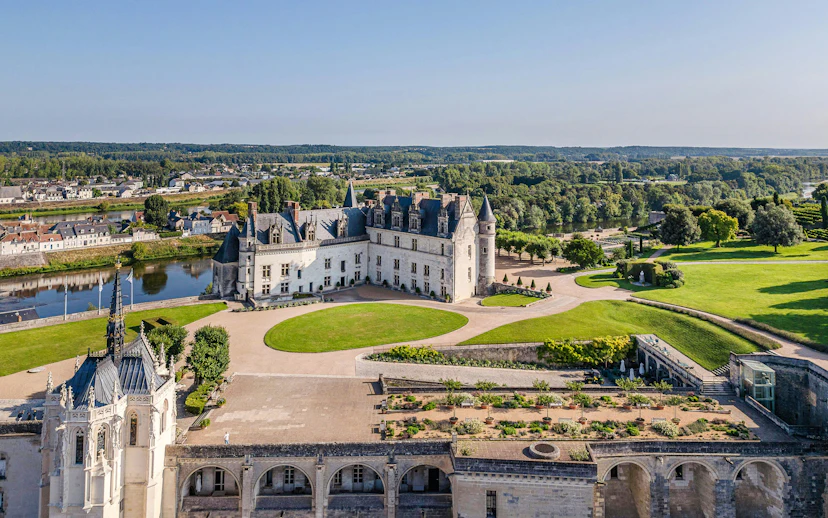
Château Royal d’Amboise is a hilltop royal residence best known for its Loire views, Saint-Hubert Chapel, and its connection to Leonardo da Vinci. The visit is compact, but the sloping layout makes it feel more layered than people expect, with terraces, ramps, chapels, and rooms unfolding across the site. The biggest difference between a rushed visit and a rewarding one is pacing: don’t stop at the chapel and leave. This guide helps you plan arrival, timing, route, and what to prioritise.
Quick overview: Château Royal d’Amboise at a glance
This is a compact but multi-level visit, so timing matters more than distance.
- When to visit: The château is open daily on a seasonal schedule, and the first hour after opening is noticeably calmer than late morning because Loire Valley day-trippers and coach groups usually reach Amboise after the town has already filled.
- Getting in: Standard entry is typically around the mid-teens in euros, with guided or combined visit options costing more, and booking ahead matters most from late spring through early fall while shoulder-season visits are usually easier to plan at shorter notice.
- How long to allow: 1.5–2 hours works for most visitors, stretching closer to 2.5 hours if you slow down on the terraces, use the interpretation tools fully, or pair it with Clos Lucé on the same day.
- What most people miss: The terrace viewpoints over the Loire, the scale of the cavalry ramps, and how much context the chapel adds once you stop treating it as only Leonardo’s tomb.
- Is a guide worth it? Yes, if you want the royal and Leonardo story to make sense in one visit; if you mainly want views, the chapel, and a self-paced route, a good digital guide is usually enough.
Jump to what you need
🕒 Where and when to go
🗓️ How much time do you need?
Visit lengths, suggested routes, and how to plan around your time
🎟️ Which ticket is right for you?
Compare all entry options, tours, and special experiences
🗺️ Getting around
How the château is laid out and the route that makes most sense
👑 What to see
Saint-Hubert Chapel, panoramic terraces, and the royal lodgings
♿ Facilities and accessibility
Restrooms, accessibility details, and family services
Where and when to go
How do you get to Château Royal d’Amboise?
The château sits above the old center of Amboise, a short uphill walk from the Loire riverfront and about 20–25 minutes on foot from Gare d’Amboise.
Montée de l’Emir Abd el Kader, 37400 Amboise, France
- Train: Gare d’Amboise → 20–25 min walk → the route is uphill, so allow extra time with strollers, luggage, or in summer heat.
- Taxi: Gare d’Amboise rank → 5–10 min ride → the easiest option if you’re arriving by train and want to save energy for the site itself.
- Car: Public parking in central Amboise → 10–15 min uphill walk → spaces closest to the old town fill first on summer afternoons.
Which entrance should you use?
The château visit is straightforward, but the uphill approach catches people out more than the ticketing does. Give yourself a little buffer before your slot so you’re not rushing the climb.
- Main entrance: Located on the upper approach to the château. Best for all visitors. Expect a short wait during quiet periods and a longer security-and-ticket check window in the late-morning peak.
When is Château Royal d’Amboise open?
- Monday–Sunday: Hours vary by season, with longer opening windows from spring through early fall.
- Seasonal schedule: Summer days usually run later than winter days.
- Last entry: Plan to arrive well before closing, especially if you want time on the terraces and in the chapel.
When is it busiest? From 11am–3pm, especially from May–September, when Amboise is absorbing both town visitors and wider Loire Valley day-trip traffic.
When should you actually go? Right at opening or in the last 90 minutes of the day gives you more space on the terraces, better photo stops, and a less stop-start route through the chapel and lodgings.
Which Château Royal d’Amboise ticket is best for you
| Ticket type | What's included | Best for |
|---|---|---|
Standard entry | Timed entry + access to the château route + chapel + terraces | A self-paced visit where you want the views, the main royal spaces, and time to move at your own speed |
Guided tour | Timed entry + guide | A first visit where you want the Valois history and Leonardo da Vinci connection explained in one clear route |
Combined visit with Clos Lucé | Entry to Château Royal d’Amboise + entry to Clos Lucé | A same-day Leonardo-focused visit where walking between sites is easier than organising a wider Loire circuit |
Loire Valley day trip | Transport + château stops set by the itinerary | A short stay where you want Amboise included without managing train times, parking, or route planning yourself |
How do you get around Château Royal d’Amboise?
The château is best explored on foot in about 1.5–2 hours, but the sloped layout makes it feel less linear than a museum and more like a sequence of viewpoints and historic spaces. The main focal points sit across terraces and upper sections rather than in one central room, so it helps to think in zones.
Main route and key zones
- Terraces: Loire panoramas, town views, and the best sense of the château’s hilltop position → budget 20–30 minutes.
- Saint-Hubert Chapel: Leonardo da Vinci’s tomb and one of the most meaningful short stops on the site → budget 10–15 minutes.
- Royal lodgings: Recreated interiors and the court-history sections that give the visit its narrative → budget 25–35 minutes.
- Exterior ramps and towers: The part that reveals how the château actually functioned, not just how it looked → budget 15–20 minutes.
Suggested route: Start with the terraces while the light is clear and your legs are fresh, then move to the chapel, continue into the lodgings, and finish with the ramps and exterior circulation spaces that many visitors skip once they think they’ve seen the headline sights.
Maps and navigation tools
- Map: On-site visitor map or digital interpretation tool → covers the main route, terraces, and key spaces → pick it up at entry before you start uphill.
- Signage: Wayfinding is decent for the main route, but a map helps if you want to understand how the terraces, chapel, and lodgings connect.
- Audio guide / app: Digital interpretation tools add useful historical context and work well if you don’t want a guided group.
- Large outdoor POIs only: Not applicable.
💡 Pro tip: Don’t save the terraces for the end — they are easier to enjoy before the middle of the day gets busier and before you’ve already mentally checked the visit off.
What are the most significant spaces in Château Royal d’Amboise?

1/5
Saint-Hubert Chapel
Era: Late Gothic
This is the stop most visitors come for first, because it is traditionally identified as the resting place of Leonardo da Vinci. It’s a small space, but it carries more weight if you slow down and look at the chapel as part of the château story, not just as a memorial stop. Most people rush in, glance at the tomb, and miss the exterior stonework and the chapel’s role within the royal complex.
Where to find it: On the château grounds, close to the main visitor route and easily reached from the terraces.
Loire-facing terraces
Attribute — Viewpoint: Panoramic river and town outlook
The terraces are what make this château feel distinct from other Loire Valley visits. You’re not just looking at gardens or façades — you’re looking out across the Loire, the roofs of Amboise, and the wider setting that made this a strategic royal site. Most visitors take one photo and move on, but the views change along the edge, so it’s worth walking the full terrace line.
Where to find it: Along the outer edge of the château grounds, overlooking the Loire and the old town.
Royal lodgings
Era: Renaissance royal residence
These rooms give the château its political and courtly context, which is easy to miss if you focus only on the Leonardo connection. They help explain why Amboise mattered to the French monarchy and why the site became such a cultural center. Most visitors move too quickly through them because the terrace views pull attention away, but this is where the château becomes more than a scenic stop.
Where to find it: Inside the main residential part of the château on the core visitor route.
Cavalry ramps and circulation spaces
Attribute — Architectural feature: Defensive and ceremonial access design
These ramps and broad circulation spaces show how the site worked when mounted movement still mattered. They give the château a physical logic that you don’t get from the rooms alone, and they help explain the unusual scale of the hilltop complex. Most visitors miss them because they feel transitional, but they are one of the clearest clues to how the château once functioned.
Where to find it: Along the sloped connecting sections and exterior movement routes within the site.
The château grounds and upper outlooks
Attribute — Landscape setting: Elevated royal grounds
The open spaces around the château do more than frame the building — they let you understand how Amboise, the Loire, and the royal residence relate to each other. This is where the visit feels least like a room-by-room tour and most like a lived historic site. Many visitors cut this short, especially in bad weather, but it is one of the best parts of being here in person.
Where to find it: Across the upper outdoor areas surrounding the main buildings and terrace edge.
Facilities and accessibility
- 🎟️ Visitor services: Ticketing and visitor assistance are handled at the entrance, so sort maps and interpretation tools before starting uphill.
- 🚻 Restrooms: Restrooms are available on site, but it’s smarter to use them early rather than waiting until the route has already carried you across the terraces.
- 🛍️ Gift shop / merchandise: The shop is the easiest place to pick up books on Leonardo da Vinci, Loire history, and château-themed souvenirs.
- 🪑 Seating / rest areas: Outdoor benches and pause points are more useful than the interior rooms for resting during the visit.
- 🅿️ Parking: Parking is in town rather than inside the château grounds, so factor in an uphill walk from most public lots.
- ♿ Mobility: Accessibility is partial rather than full, because the site includes historic slopes, uneven stone, and level changes that can make parts of the route difficult.
- 👁️ Visual impairments: The visit relies heavily on visual interpretation, so staff support and guided explanation are more useful here than expecting tactile-heavy displays.
- 🧠 Cognitive and sensory needs: The first hour of the day is the easiest low-crowd window, while late morning is louder and more stop-start around the chapel and terraces.
- 👨👩👧 Families and strollers: Families can visit comfortably, but the sloped route is easier with a lightweight stroller or baby carrier than a bulky pushchair.
This works well for children who like castles, open viewpoints, and short bursts of history rather than long indoor museum routes.
- 🕐 Time: Around 60–90 minutes is realistic with young children if you focus on the chapel, views, and outdoor sections first.
- 🏠 Facilities: Open-air pause points and restrooms help more than indoor family spaces, so plan short breaks rather than one long stop.
- 💡 Engagement: Turn the visit into a lookout game by spotting the Loire, the town rooftops, and the steep access routes before moving indoors.
- 🎒 Logistics: Bring water, sun protection, and a small bag, because the uphill approach and exposed terrace sections feel longer in warm weather.
- 📍 After your visit: Clos Lucé is an easy next stop if your child likes inventions, models, and the Leonardo da Vinci connection.
Rules and restrictions
What you need to know before you go
- Entry requirement: Timed entry is the easiest way to visit in busy months, and arriving 15–20 minutes early helps you handle the uphill approach without stress.
- Bag policy: A small day bag is easiest, because large luggage is awkward on ramps, in historic interiors, and on a sloped route.
- Re-entry policy: Plan your visit as one continuous loop, because stepping out mid-visit usually means breaking your rhythm and walking back uphill again.
Not allowed
- 🚫 Food and drink: Eating is best left for before or after your visit, especially in interior heritage spaces and chapel areas.
- 🚬 Smoking / vaping: Smoking and vaping are not part of the historic route and should be treated as restricted unless a clearly marked area says otherwise.
- 🐾 Pets: Pets are not suitable for the château route, though service animals should follow the site’s access rules.
- 🖐️ Touching / climbing: Don’t climb on walls, barriers, or historic features, because much of the site is preserved stonework with exposed edges and wear.
Photography
Personal photography is generally fine in the outdoor areas and on most of the main route, but historic interiors and chapel spaces call for a more careful approach. Don’t assume every room has the same rules: if signage or staff restrict flash, tripods, selfie sticks, or filming equipment in a specific area, follow the local rule rather than treating the whole château as fully open-photo.
Good to know
- Sloped surfaces: The route looks short on paper, but ramps, cobbles, and uphill sections make it feel longer than a flat museum visit.
- Weather exposure: The terrace sections are more exposed than many visitors expect, so wind, rain, or strong sun changes the comfort level quickly.
Practical tips
- Booking and arrival: In July and August, book one of the first or last entry windows of the day, because the 11am–3pm band is when Amboise feels most compressed by wider Loire Valley traffic.
- Pacing: Don’t spend all your energy on the first big Loire view — save time and attention for the chapel and the ramps, which are the parts people often underplay.
- Crowd management: A weekday opening slot works better here than a late-morning weekend slot, because the château absorbs both local town visitors and regional day-trippers at roughly the same time.
- What to bring or leave behind: Bring a small bottle of water and keep your bag light; the uphill approach and stepped historic route make heavy bags annoying faster than people expect.
- Food and drink: Eat before you go in or plan a proper meal after the visit in town, because this works better as one continuous 1.5–2 hour visit than as a stop-start route with a break in the middle.
- Photos: If terrace photos matter to you, go early or late in the day, when the lookout edges are less crowded and you won’t be constantly waiting for gaps.
- Same-day planning: If you’re pairing the château with Clos Lucé, do Château Royal d’Amboise first for the views and overview, then walk down to the Leonardo-focused visit later.
What else is worth visiting nearby?
Commonly paired: Clos Lucé
Distance: 450m — 6–8 min walk
Why people combine them: It’s the most natural same-day pairing in Amboise, because the château gives you the royal backdrop and Clos Lucé gives you the Leonardo da Vinci story in much more detail.
Book / Learn more
Commonly paired: Château Gaillard
Distance: 1km — 15–20 min walk
Why people combine them: It fits well if you want a quieter second château stop in Amboise without committing to a longer Loire Valley transfer.
Also nearby
Pagoda of Chanteloup
Distance: 3km — 8–10 min drive
Worth knowing: It’s a better add-on if you have a car and want a shorter, landscape-heavy stop rather than another full historic interior visit.
Amboise old town and Loire riverfront
Distance: 500m — 8–10 min downhill walk
Worth knowing: This is the easiest no-stress follow-up, especially if you want cafés, river views, and time to decompress after the uphill château route.
Eat, shop and stay near Château Royal d’Amboise
- Best overall: Les Arpents — refined French, highly rated, Bib Gourmand mention in local guides. Book ahead.
- Classic Loire meal: La Brèche — strong local favorite for a nicer lunch/dinner.
- Fine dining / special occasion: Château de Pray — Michelin-recognized château restaurant just outside town.
- Easy tourist stop: Le Choiseul or Le Clos d’Amboise — both listed by the Amboise Val de Loire tourist office.
- Quick café/pastry: Pâtisserie Bigot — good for terrace lunch, quiche, salads, pastries.
- 💡 Pro tip: The easiest rhythm is coffee before the uphill walk and a proper lunch after your visit in the old town, when you’re already coming back downhill.
- Château shop: The most convenient place for books, history-focused gifts, and Leonardo-related souvenirs close to the exit.
- Old town wine and local-product shops: Better for Loire wines and regional food gifts than the château itself, and easier to browse after your visit.
Yes — if you want a walkable base for Amboise and an easy rhythm between the château, Clos Lucé, and the riverfront. Central Amboise suits short stays especially well, because you can handle most of the town on foot and avoid constant parking or train planning. It is less ideal if your goal is a wide Loire Valley castle circuit across several towns in a single trip.
- Price point: Central Amboise skews mid-range to boutique, with the most convenient addresses commanding a premium in peak season.
- Best for: Short stays, couples, and travelers who want to do Amboise properly without relying on a car for every stop.
- Consider instead: Tours works better for a broader city base with more transport options, while Blois is often the more practical choice if Chambord and the eastern Loire castles are higher on your list.
Frequently asked questions about visiting Château Royal d’Amboise
Most visits take 1.5–2 hours. You can do it in about an hour if you only want the chapel, the main rooms, and the terraces, but a slower visit with photos and interpretation tools usually pushes it closer to 2.5 hours.
Yes, it’s worth booking ahead for weekends, holidays, and the main late-spring to early-fall season. Château Royal d’Amboise is not as slot-sensitive as the biggest Paris attractions, but booking ahead gives you the better arrival windows and removes the risk of wasting time at the entrance.
Arrive 15–20 minutes early. The uphill approach from town catches more people out than the actual check-in does, so that extra buffer matters more here than at a flat, street-level attraction.
Yes, a small backpack or day bag is usually fine. Large luggage is a bad idea because the route includes slopes, historic interiors, and outdoor sections where carrying bulky bags becomes frustrating very quickly.
Yes, personal photography is usually fine on much of the route. Be more careful in the chapel and interior spaces, and expect flash, tripods, selfie sticks, or filming setups to be restricted where space is tight or preservation matters more.
Yes, group visits are common and work well here. If you’re visiting with a guided group, the main advantage is not speed but having the royal history, chapel significance, and Leonardo connection explained in one coherent route.
Yes, especially for children who like castles, views, and outdoor movement. The visit is easier with school-age children than with toddlers in bulky strollers, because the route includes uphill sections, ramps, and uneven surfaces.
Accessibility is partial rather than fully seamless. Some adapted access is possible, but this is still a historic hilltop site with slopes, uneven ground, and level changes that make parts of the visit harder than a modern museum.
Yes, there are plenty of food options nearby in central Amboise. The better move is to eat before or after your visit, because the château itself works best as one continuous 1.5–2 hour route rather than a stop for a mid-visit meal.
Yes, and many visitors do exactly that. The two sites are close enough to connect on foot, and the pairing makes sense because one gives you the royal setting while the other deepens the Leonardo da Vinci story.
Yes, the site traditionally associated with his burial is Saint-Hubert Chapel within the château grounds. Even if that is your main reason for visiting, don’t make the mistake of treating the chapel as the whole visit — the terraces and exterior route add much of the château’s real impact.