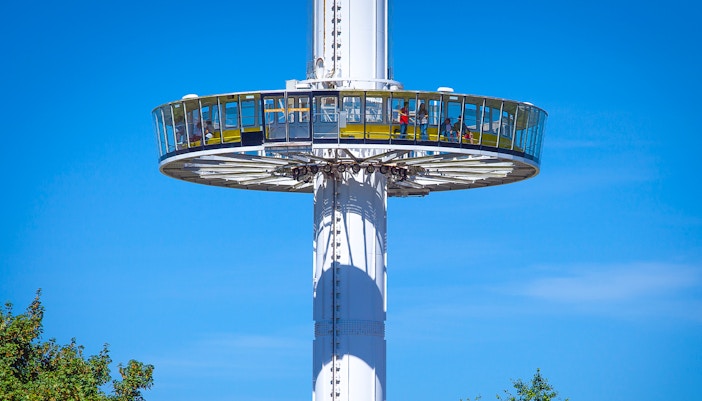
Plan your visit to Futuroscope in France
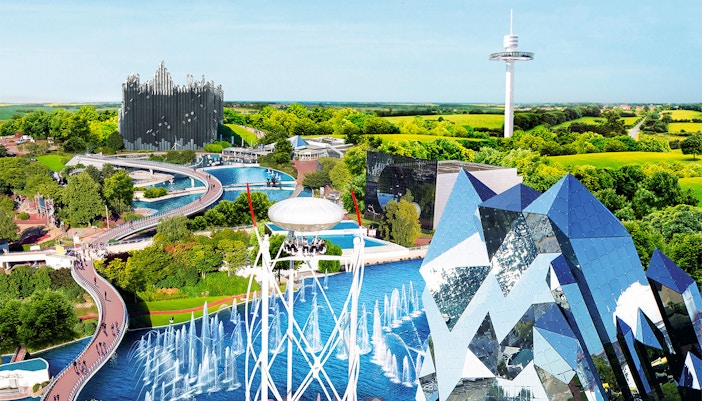
Futuroscope is a technology-driven theme park best known for immersive theaters, simulators, and a genuinely strong closing night show rather than a nonstop lineup of big coasters. A visit is more spread out than many first-timers expect, with long walks between zones and queues that can dominate summer days. The biggest difference between a frustrating visit and a smooth one is what you do in the first 30 minutes after entry. This guide covers timing, routes, tickets, and how to pace the park well.
Quick overview: Futuroscope at a glance
If you're making fast decisions before booking, these are the details that will most change your day.
- When to visit: Futuroscope usually opens from 9:15am, with closing between 7pm and 11pm depending on the date; Tuesday–Thursday in May, early June, and mid-September feel much calmer than mid-July to mid-August, because French school holidays push the four headliners to 70–90-minute waits.
- Getting in: From €47 for a 1-day dated ticket, with 2-day tickets from €79 and Aquascope from €39; booking ahead matters because the cheapest dated tiers disappear first, and Aquascope must be reserved online in advance.
- How long to allow: 1 full day works for a focused visit, but 2 days is far more realistic in summer or if you want Futuropolis, repeat rides, and the night show without rushing.
- What most people miss: Les Yeux Grands Fermés, the calmer Thomas Pesquet IMAX film, and the fact that the park opens before many attractions do, which is the best moment to sort height wristbands and virtual queue slots.
- Is a guide worth it? Usually no, because this park is more about timing than interpretation, but a clear route matters more here than at parks with a simpler loop layout.
Jump to what you need
🕒 Where and when to go
🗓️ How much time do you need?

🎟️ Which ticket is right for you?
🗺️ Getting around
🎢 Must-ride attractions
♿ Facilities and accessibility
Where and when to go
How do you get to Futuroscope?
Futuroscope is in Chasseneuil-du-Poitou, about 10km north of central Poitiers, with its own TGV station and direct access off the A10.
Avenue René Monory, 86360 Chasseneuil-du-Poitou, France
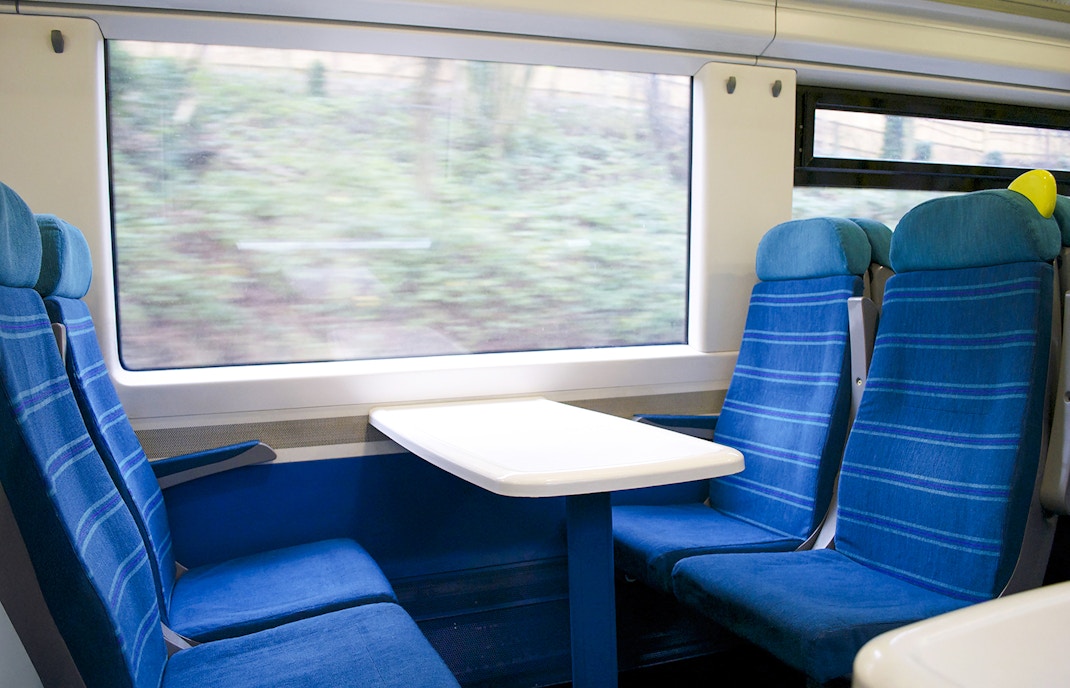
- Train: Gare du Futuroscope → 10–15-minute walk → use the pedestrian footbridge when it is operating
- TER from Poitiers: Poitiers Gare → about 9 minutes to Futuroscope station → fastest option if you're staying in Poitiers
- Bus: Vitalis lines 1 or 21 → around 30 minutes from Poitiers → frequency is thinner on Sundays
- Car: Main parking lot at the park → 5–10-minute walk to security → €13 for the day, or €8 after 2pm
- Parking tip: Futuroscope TGV station parking is free → about 15 minutes on foot → only practical if the footbridge hours suit your return
Getting here from nearby cities
Futuroscope works both as a Poitiers day trip and as a longer family stop from Paris or western France.
From Paris
- Distance: 330km
- Travel time: About 1 hour 25 minutes via direct TGV from Paris-Montparnasse
- Time to budget: Fast enough for a same-day visit, but you will still need a full park day rather than a half-day stop
From Poitiers
- Distance: 10km
- Travel time: About 9 minutes by TER or 15 minutes by taxi
- Time to budget: The easiest base if you want cheaper hotels and a short transfer
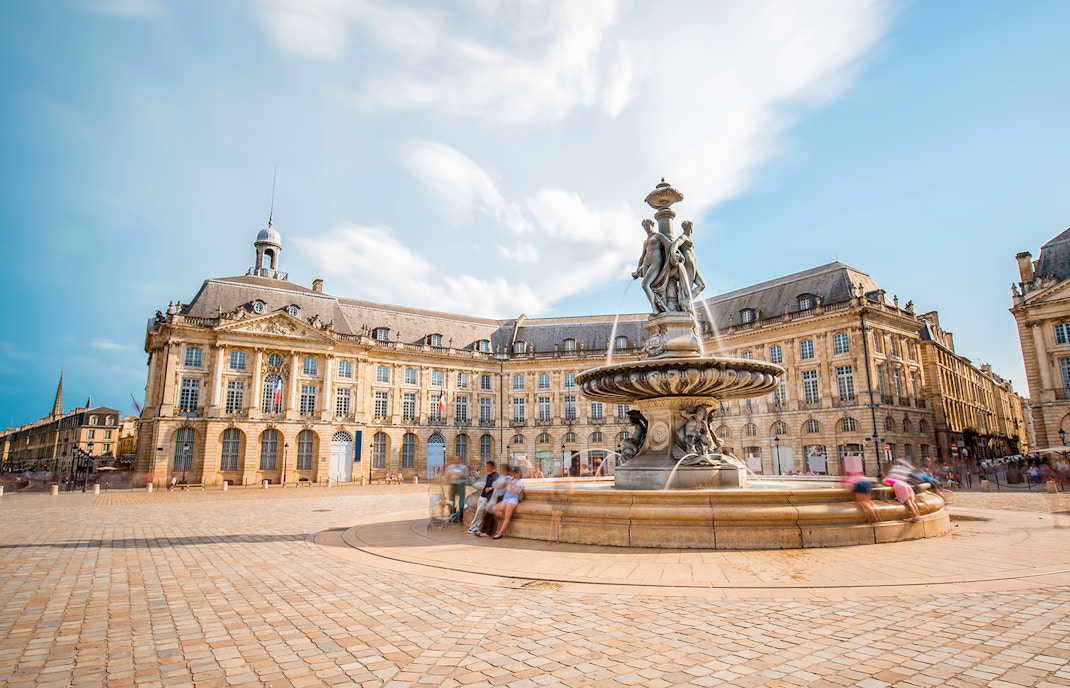
From Bordeaux
- Distance: 200km
- Travel time: About 2 hours by car via the A10
- Time to budget: Better as part of a 1-night stay than a rushed same-day round trip
Which entrance should you use?
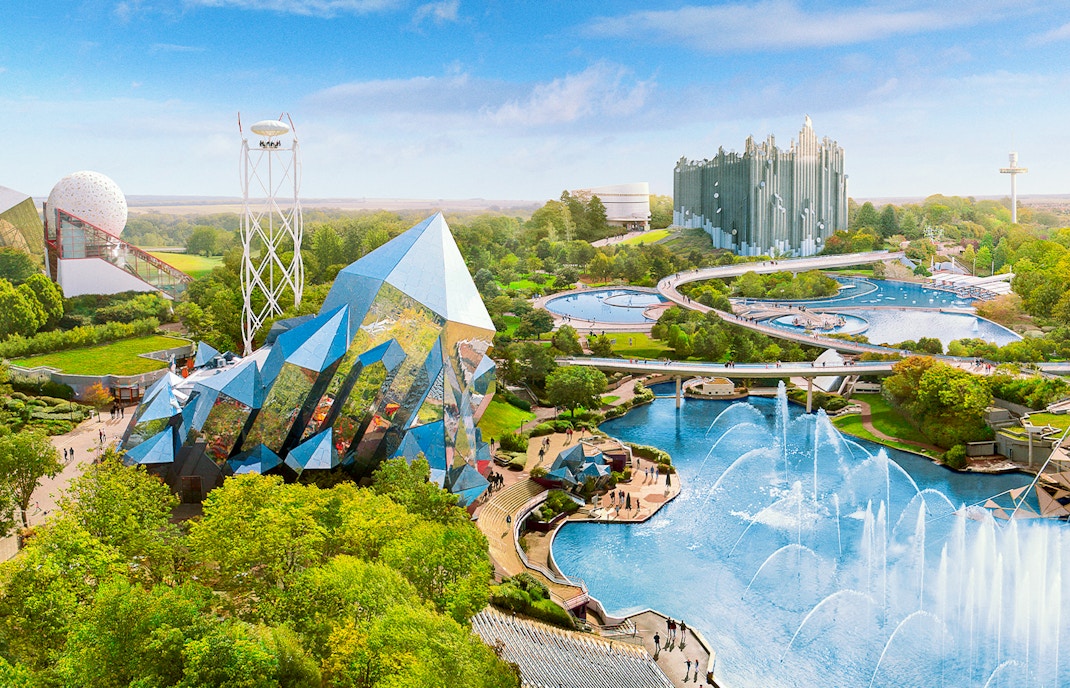
Futuroscope effectively has one main entrance, but the mistake that slows people down is joining the standard flow when they actually need ticket exchange first.
- Pre-booked park tickets: Main turnstiles. Best for visitors arriving with dated or open-dated tickets. Expect 5–15 minutes at security outside peak mornings.
- OTA voucher exchange: Futuroscope Destination Agency, left of the main entrance. Best for Headout or other voucher holders. Budget an extra 20–30 minutes on busy mornings.
- Box office collection: Main ticket booths. Best for under-5 free tickets and on-the-day purchases. Expect 15–30 minutes during holiday mornings.
When is Futuroscope open?
- Most operating days: Park access from 9:15am; closing varies by date from 7pm to 11pm
- Selected low-season Mondays: Reduced operating windows can run from 2pm to 6pm
- Many headline attractions: First openings are often from 10am–10:30am
- Last major event: La Clé des Songes usually starts about 30 minutes before park close
When is it busiest? Mid-July to mid-August, Easter breaks, and late-October school holidays are the hardest windows, with the biggest impact on Chasseurs de Tornades, Mission Bermudes, and Objectif Mars.
When should you actually go? Tuesday–Thursday in May or mid-September gives you the best chance of riding the headliners, using Lineberty successfully, and still getting a good spot for the night show without camping out early.
How do you get around Futuroscope?
Park layout
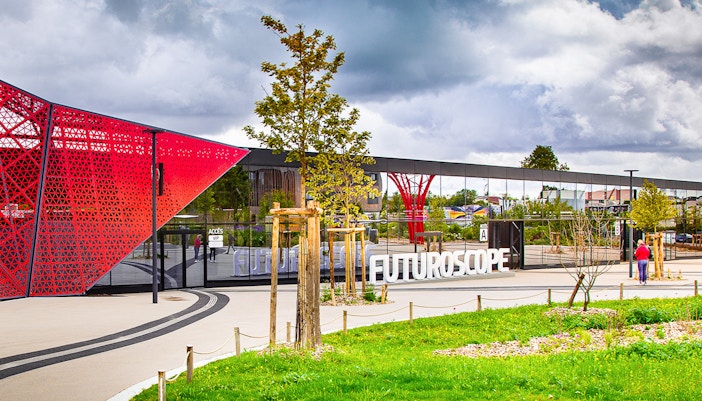
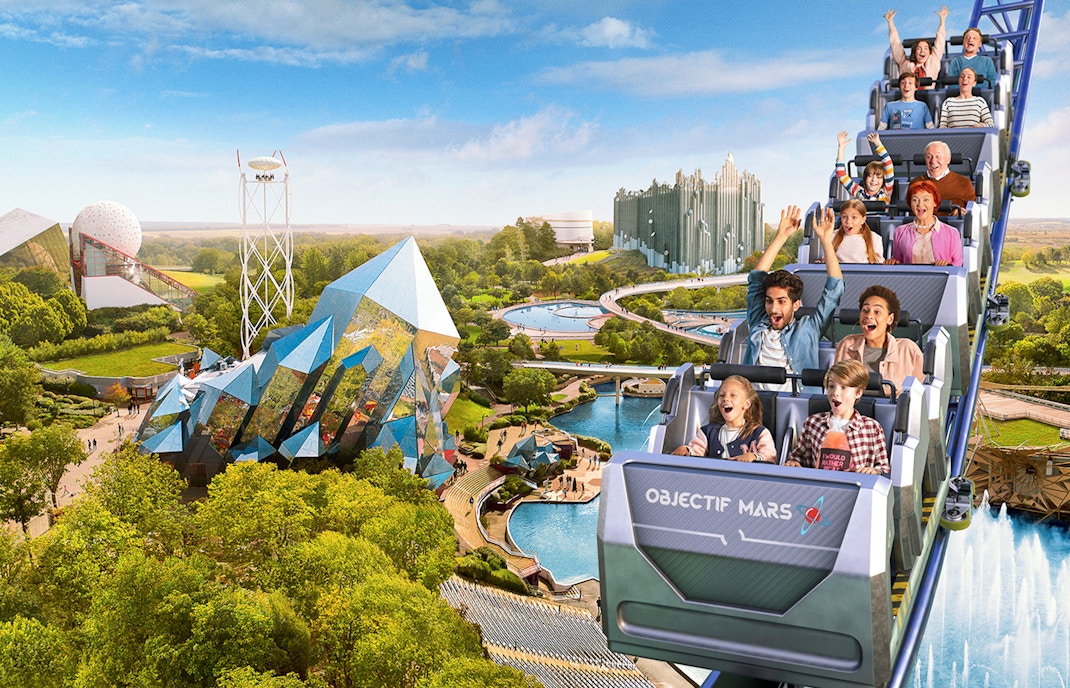
Futuroscope has several distinct zones rather than one obvious loop, so the park feels more spread out than it looks on a map and punishes aimless backtracking.
- High Sensations: Objectif Mars, Danse avec les Robots, and Sébastien Loeb Racing Xperience → budget 2–3 hours if queues are moderate
- Central cinematic core: Chasseurs de Tornades, L'Extraordinaire Voyage, and Thomas Pesquet IMAX → budget 2–3 hours because these are the park's strongest all-ages anchors
- Family zone: Arthur l'Aventure 4D, Lapins Crétins, Le Petit Prince, and nearby gentler attractions → budget 1.5–2 hours
- Futuropolis: Children's city with role-play, driving, and climbing activities → budget 90 minutes to 2+ hours with ages 4–10
- Lakefront finish: La Clé des Songes seating area → budget 30 minutes before showtime if you want a central bench spot
Suggested route: Start by crossing once toward the headliners you care about most, then work back through the central theaters and save Futuropolis for the afternoon, because zigzagging between thrill rides and the kids' area is what wastes the most time here.
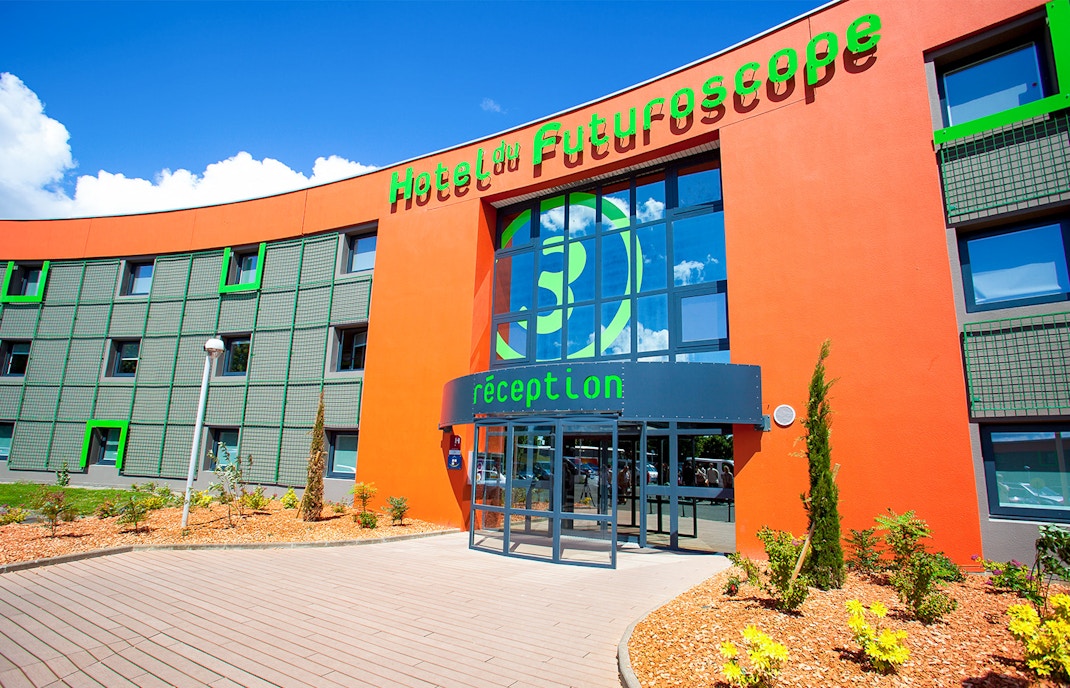
Maps and navigation tools
- Map: Futuroscope app → live park map, showtimes, and wait times → download it before arrival
- Signage: Good enough for the main paths, but not good enough to build a smart route on the fly once queues spike
- Audio guide / app: The app handles English and Spanish translation on certain attractions, but your own headphones usually work better than relying on ambient speaker audio
- Navigation tip: Lineberty is a second app, not part of the main park map, so install both before the gates open
💡 Pro tip: Treat the park like a timed theater district, not a regular coaster park — check the first showtimes before you commit to your first queue, or you'll spend the day crossing the same central spine twice.
Get the Futuroscope map / audio guide
What are the must-ride attractions at Futuroscope?
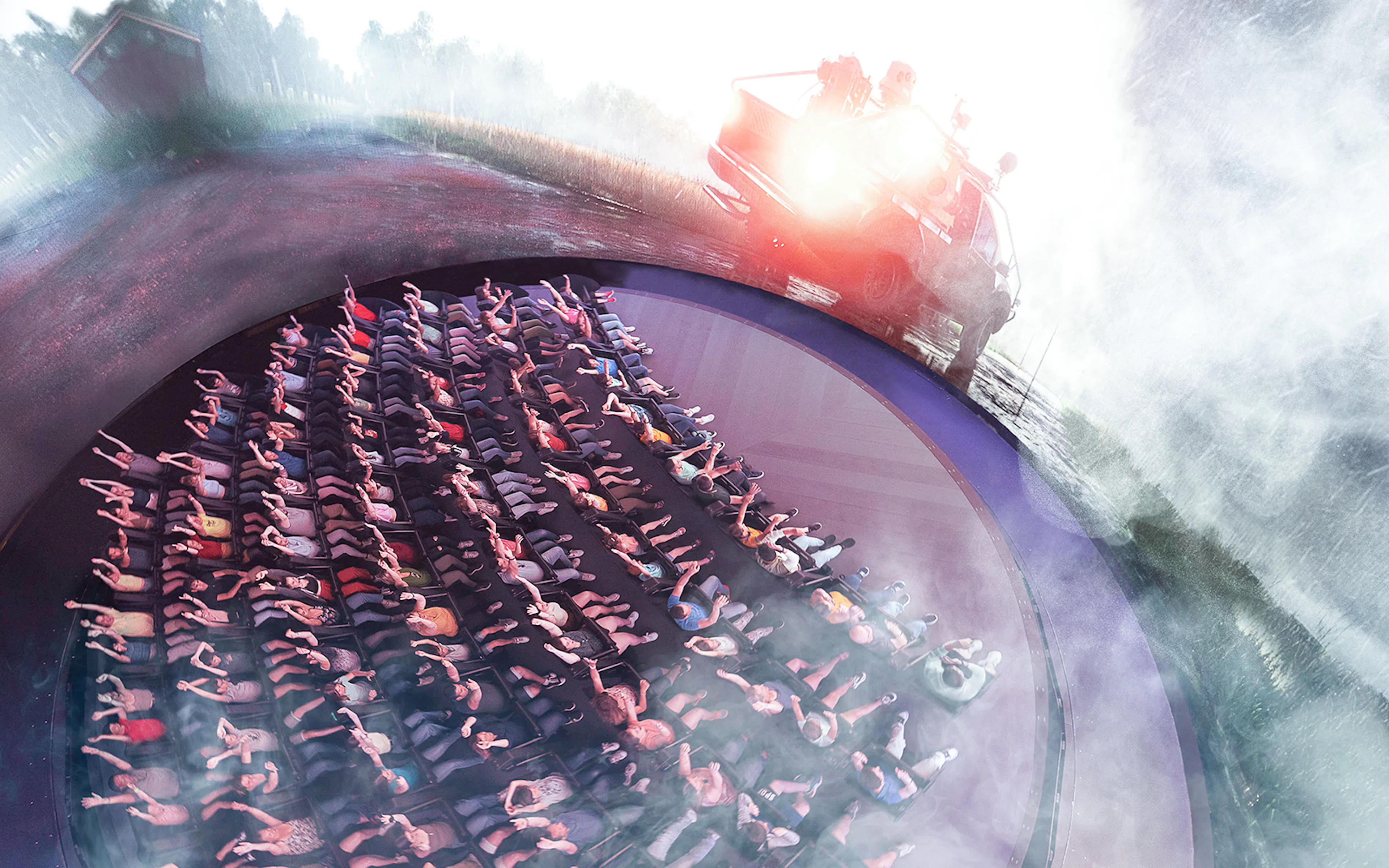
Chasseurs de Tornades
Ride type: Rotating dynamic theater
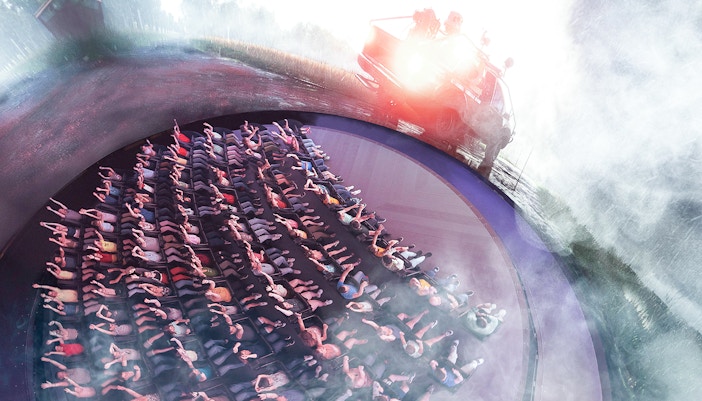
This is the attraction that most clearly explains why Futuroscope works when it is at its best: you are not just watching a screen, you are inside a rotating platform wrapped by a circular LED storm. The movement is intense enough to feel physical without becoming a coaster, which is why it lands so well with mixed-age groups. What many visitors miss is that the queue is often one of the day's worst by late morning, even though the actual show cycle is short.
Where to find it: In the High Sensations area, one of the park's main thrill anchors.
L'Extraordinaire Voyage
Ride type: Flying theater
This is Futuroscope's broadest crowd-pleaser, with suspended seating, wind, scent, and water effects that feel more elegant than aggressive. It is one of the rare attractions here that thrill-seekers, grandparents, and cautious riders all tend to agree on. What people rush past is the fact that this is a smart early backup if bigger thrill rides are closed, because it still delivers a headline-level experience without the same motion barrier.
Where to find it: In the central attraction core, within easy reach of the park's main pathways.
Mission Bermudes
Ride type: Water-based rocking boat ride
Mission Bermudes is the newest headline attraction and one of the park's most distinctive, because the ride system itself feels unfamiliar even to frequent theme-park visitors. It is part dark ride, part water ride, and part drop attraction, so it covers more emotional ground than the name suggests. The detail many people underestimate is how wet you can stay afterward, which matters if you ride late in the day or before the evening show.
Where to find it: Near the front half of the park, close enough to make it a strong first major ride.
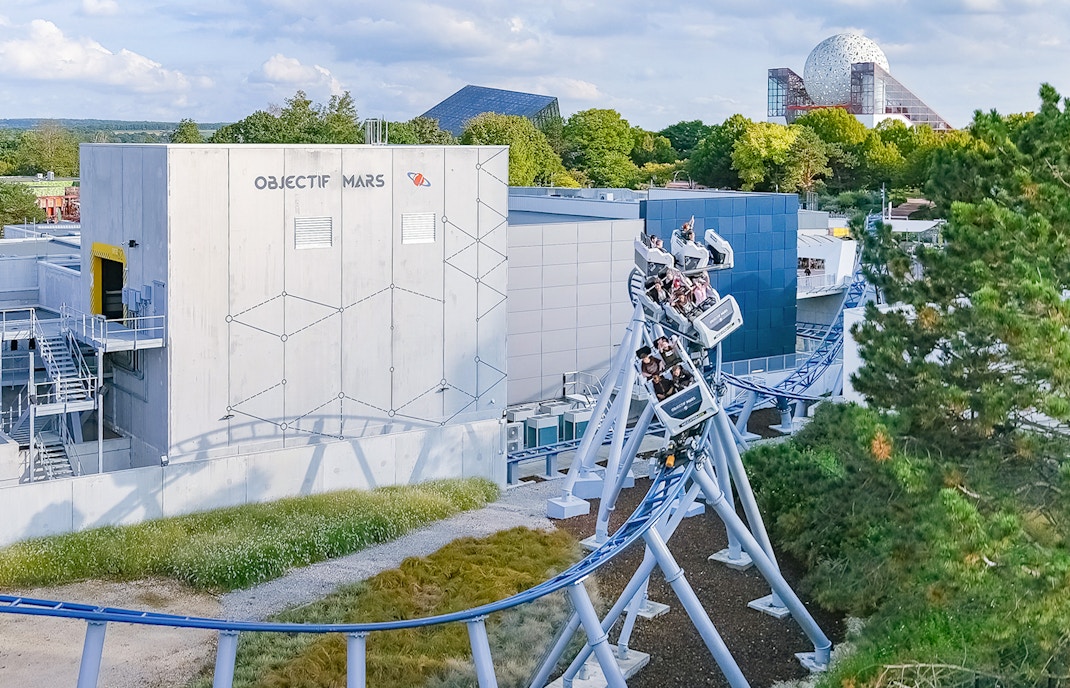
Objectif Mars
Ride type: Indoor and outdoor launched coaster
This is Futuroscope's first roller coaster, and it matters less for raw intensity than for balance: it gives the park a conventional thrill anchor without abandoning the space-and-simulator identity. The launch and indoor scenes make it more memorable than the top speed alone would suggest. What many visitors miss is the single-rider option, which can cut a long wait dramatically if your group is willing to split up.
Where to find it: In High Sensations, near the other bigger-thrill experiences.
Danse avec les Robots
Ride type: Robotic-arm thrill ride
This is still one of the strangest attractions in the park in the best possible way, with industrial robot arms lifting riders high above the ground to programmed music. It feels more exposed and more disorienting than first-time visitors expect, which is exactly why some love it and others bail after watching one cycle. The detail most people miss is the height maximum as well as the minimum, so it is worth checking the restriction board before you queue.
Where to find it: In the High Sensations zone, visible from the central esplanade.
La Clé des Songes
Ride type: Nighttime multimedia spectacular
This is not a ride, but it is still one of the park's must-do experiences because it gives the whole day a proper ending instead of a slow drift to the exit. The mix of water screens, lasers, pyrotechnics, and music is strong enough that even visitors who struggle with the French-language story usually leave satisfied. What people get wrong is arrival time: the best central benches fill 20–30 minutes before the show starts.
Where to find it: On the central lake, where the day's crowd gathers shortly before closing.
Facilities and accessibility
- 🎒 Cloakroom / lockers: Lockers are available inside the park, and paid luggage storage is offered at the main entrance and at the TGV station.
- 🚻 Restrooms: Restrooms are spread across the park, including some near waiting areas, so you do not always need to exit a zone to find one.
- 🍽️ Restaurants / food counters / picnic areas: There are full-service restaurants, faster Illico Resto counters, and designated picnic areas, but off-peak food counters can start shutting around 2pm.
- 🪑 Seating / rest areas: The lawns and beanbag areas around the central esplanade are the best places to pause between attractions.
- 🅿️ Parking: Main parking is on-site and costs €13 for the day, with EV charging and motorhome spaces available.
- 🩺 First aid / medical station: First-aid support is available on-site, which matters in a park with water rides, long walks, and motion-heavy attractions.
- 🎟️ Ticket help: The Futuroscope Destination Agency desk sits to the left of the main entrance and handles voucher exchange.
- 👶 Baby facilities: Baby areas with changing tables and microwaves are available, and stroller rental is offered near the entrance in limited numbers.
- ♿ Mobility: Futuroscope carries the Tourisme & Handicap label, has ramps and elevators across the site, offers free wheelchair or scooter loan, and provides priority access for eligible guests, but some thrill attractions still require guests to walk unaided.
- 👁️ Visual impairments: Les Yeux Grands Fermés is one of the most distinctive accessibility-led experiences in the park, and staff can guide you to the right support points on arrival.
- 🧠 Cognitive and sensory needs: The park has been responsive to families requesting access support, but the loudest and most overstimulating areas are the High Sensations rides and the lakefront build-up before the night show.
- 👨👩👧 Families and strollers: Much of the park is stroller-friendly on the main paths, but the long walking distances still make pacing important, and strollers are not allowed inside Aquascope.
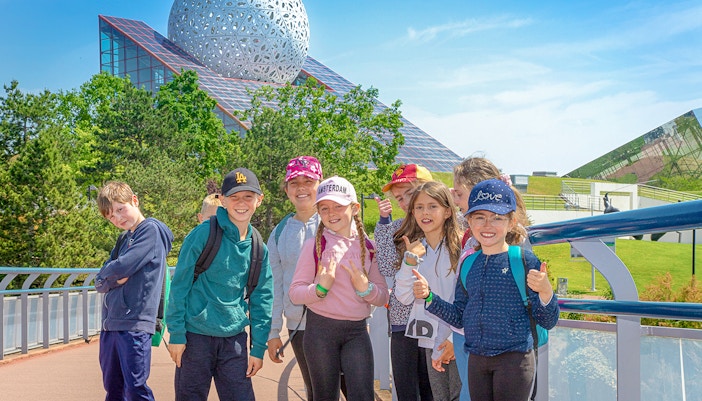
Futuroscope works especially well for kids aged about 4 and up, because it mixes gentler theaters with hands-on areas where children are not just passengers.
- 🕐 Time: With younger children, 1 long day is enough if you prioritize Futuropolis, Arthur, Lapins Crétins, and one or two bigger family attractions.
- 🏠 Facilities: Baby areas, stroller rental, changing tables, microwaves, and family-friendly dining make the basics easier than at many large parks.
- 💡 Engagement: Get height wristbands as soon as you enter, because it removes repeated measuring and makes it much easier to say yes or no quickly at each ride.
- 🎒 Logistics: Bring snacks for before entry, a full phone battery, and a spare layer after Mission Bermudes, and aim for an early lunch before the food lines thicken.
- 📍 After your visit: Aquascope is the easiest family add-on nearby if you are staying overnight and want a second day that feels completely different.
Rules and restrictions

What you need to know before you go
- Pre-booked tickets are the simplest option, voucher holders must exchange at the Futuroscope Destination Agency desk, and under-5s still need a free physical ticket collected on arrival.
- Bags are screened at the entrance, and large coolers, glass bottles, and sharp objects are not allowed inside.
- Same-day re-entry is allowed with a hand stamp, which means you can step out, but it is only useful if you are staying close enough to make the extra walking worth it.
Not allowed
- 🚫 Outside food is not allowed inside the park itself, though designated picnic areas are available.
- 🐾 Pets are not allowed in the park, but a free kennel is available near the main parking entrance with a vaccination certificate.
- 🍾 Glass bottles and alcoholic drinks are not permitted through security.
- 🔪 Sharp objects and bulky coolers are refused at bag check.
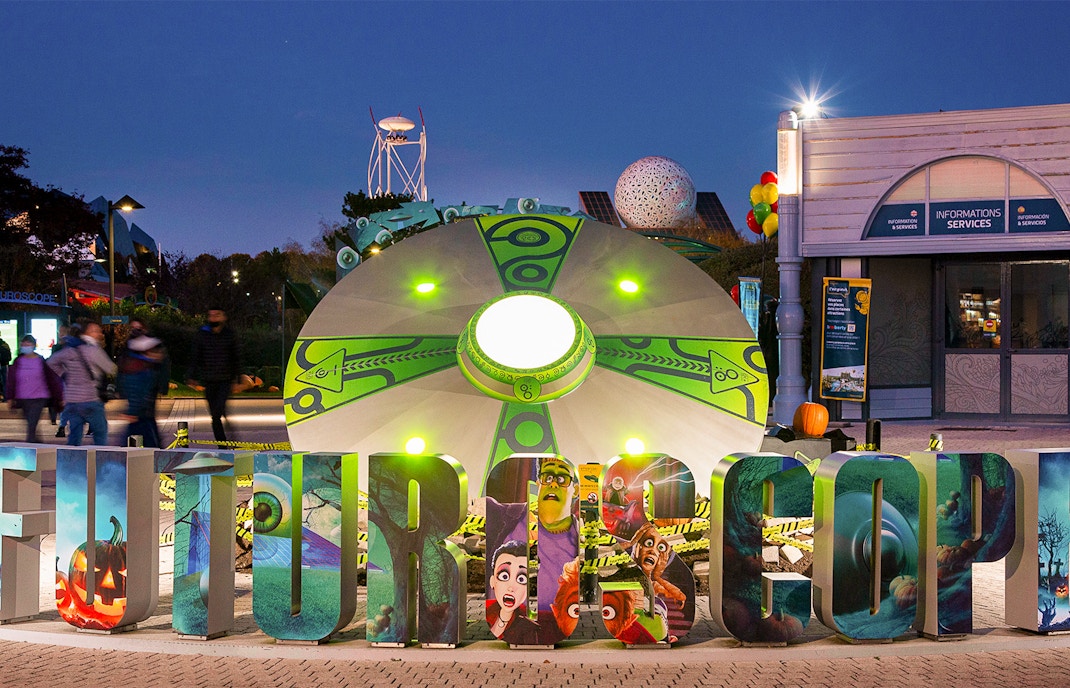
Photography
Photography is easiest in outdoor spaces, queue areas, and from the lake before the night show. On thrill rides and in motion-heavy attractions, loose-item safety rules matter more than camera enthusiasm, so expect staff to restrict anything that could fall. Flash, tripods, and selfie sticks are a bad fit for crowded indoor theaters and may slow loading or be refused by staff.

Good to know
- Lineberty only runs on selected school-holiday periods, and the best slots can disappear within minutes of the park opening.
- Aquascope is not an add-on you can safely leave until arrival, because summer-day capacity fills and there are no on-site ticket sales.
Practical tips
- Book a dated ticket at least 3 days ahead if you can, because that is when the cheapest 1-day pricing starts and the gap to on-the-day entry is meaningful.
- Arrive before 9:15am, but don't waste that early entry window standing outside a closed headline ride — use it for height wristbands, headset pickup, and Lineberty reservations instead.
- Ride Mission Bermudes early if you care about staying comfortable for the rest of the day, because the splash effect can leave you damp for far longer than one quick water ride usually does.
- Save your energy for the central thrill-and-cinema cluster first, because the park's long walking distances make late-day backtracking feel worse than the rides themselves.
- Eat lunch by 11:45am if you are visiting outside peak season, since several faster counters begin shutting around 2pm and late lunch options thin out fast.
- Bring your own headphones for in-attraction translation, because reviews repeatedly mention that app audio is hard to hear over ride sound.
- If you are driving, compare the €13 main lot with the free station parking, but only use the free option if the footbridge hours work for both your arrival and your night-show exit.
- If you are sensitive to motion, build your day around Thomas Pesquet IMAX, Arthur, and L'Extraordinaire Voyage before committing to Danse avec les Robots or Sébastien Loeb.
What else is worth visiting nearby?

Commonly paired: Aquascope
Aquascope
Distance: On-site — about 5 minutes on foot from the main resort area
Why people combine them: It turns a 1-day park stop into a proper 2-day break, and the all-indoor format is especially useful if the weather turns or the main park feels queue-heavy.
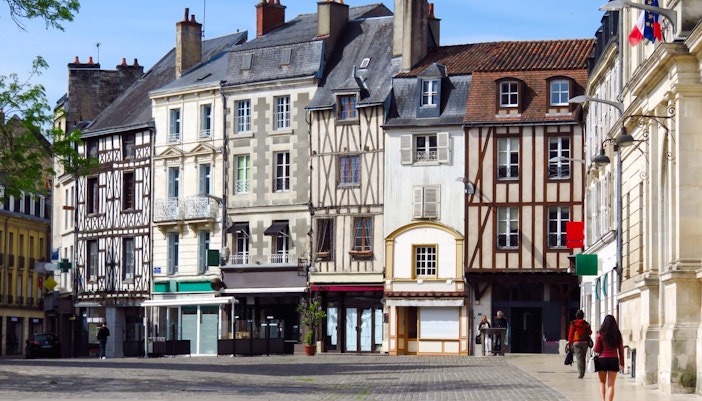
Commonly paired: Poitiers historic center
Poitiers historic center
Distance: 10km — about 20–30 minutes by train, bus, or car
Why people combine them: It gives you a calmer half-day of churches, old streets, and cafés before or after a very sensory park day, and it is the most logical nearby base if you are not staying on-site.
Also nearby
Arena Futuroscope
Distance: On-site — a short walk within the resort
Worth knowing: Best if your trip already includes a concert or event, rather than as a standalone sightseeing stop.
zerOGravity
Distance: On-site — within the wider resort area
Worth knowing: This is a separate free-fall style experience that makes the most sense for older kids and adults who want one extra adrenaline hit outside the park gates.
Eat, shop and stay near Futuroscope
- On-site: Futuroscope's restaurants are convenient rather than uniformly great, so they work best when timed early rather than when you are already hungry and every counter is busy.
- L'Atelier des Saveurs (inside the park, Avenue René Monory): Sit-down park dining with stronger reviews than most theme-park restaurants and a better choice if you want one proper meal.
- Space Loop (3-minute walk, Hotel Station Cosmos): Resort restaurant where dishes arrive on looping rails, worth it for the novelty if you book ahead and do not mind paying more.
- La Crêperie Volante (inside the park, Avenue René Monory): A straightforward family option when you want table service, though it is not the place for a budget meal.
- 💡 Pro tip: Eat before 12 noon or after the main lunch rush, because off-peak counters can close early and the best on-site restaurants are much easier to enjoy when you are not using them as a fallback.
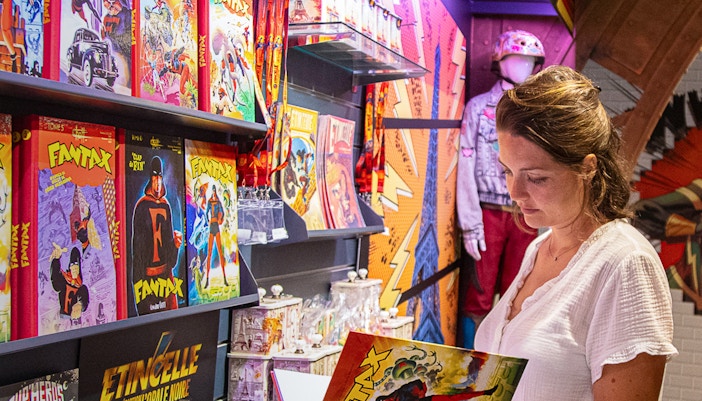
- Futuroscope boutiques: Park-branded souvenirs and ride merchandise are easiest to pick up near the entrance and exit, so leave this until the end rather than carrying bags all day.
- Station Cosmos resort shop: Space-themed gifts and hotel merchandise are the most logical non-park shopping stop if you are sleeping on-site or eating at Space Loop.
If your trip is built around Futuroscope, yes — this is one of the easier French theme-park areas to stay overnight because the resort is self-contained and the park day often runs late thanks to the night show. If your wider priority is city atmosphere, Poitiers makes a better base and only costs you a short transfer.
- Price point: On-site stays skew mid-range rather than cheap, but packages can be better value than buying the room and entry separately.
- Best for: Visitors doing 2 days in the park, combining the main park with Aquascope, or traveling with children and wanting the least complicated late-night exit.
- Consider instead: Poitiers city center if you want restaurants, historic streets, and more hotel choice, or central Poitiers station area if you want the simplest rail connection.
Frequently asked questions about visiting Futuroscope
Most visitors need 1 full day, but 2 days is the better plan in summer or during school holidays. On a quiet weekday, you can cover most headliners in one long day. In July, August, Easter, or late October, queues alone can turn a 1-day plan into a highlights-only visit.
Yes, booking in advance is the smart move because dated tickets are cheaper from 3 days out and Aquascope must be booked online before arrival. You can still buy park entry on the day, but it costs more. Aquascope is the stricter case, because there are no on-site sales.
There is no paid skip-the-line pass at Futuroscope, so the real question is whether you use Lineberty well. During school holidays, Lineberty can cut waits on selected headliners, but slots vanish quickly after opening. If you miss that window, your next best value is usually a 2-day ticket rather than hoping queues collapse.
Aim to be at the gates before 9:15am on a full park day. That early window matters because many attractions do not start until 10am or 10:30am, which gives you time to get height wristbands, sort translation headsets, and reserve your first virtual queue slots instead of wasting time later.
Yes, small bags and backpacks are fine, but they will be screened at security. Large coolers, glass bottles, alcohol, and sharp objects are not allowed. If you are carrying more than you want all day, use the lockers or the paid luggage service at the entrance or TGV station.
Yes, photos are generally fine in outdoor areas and around the park, but loose-item rules matter on rides and in motion-heavy attractions. The easiest photography spots are the central esplanade, the newer queue lines, and the lake before La Clé des Songes. Use caution with anything bulky inside theaters.
Yes, and groups of 4 or more can get better ticket pricing if they book ahead. The bigger challenge is keeping everyone on the same schedule once queues build, so it helps to agree early on whether your day is thrill-led, family-led, or balanced instead of trying to do everything together.
Yes, especially for children aged about 4 and up, because the park mixes gentler theaters with a large kid-focused zone called Futuropolis. Very young children enter free under the age of 5 years, but height restrictions limit the bigger thrill rides. Families with mixed ages usually do best here when they split priorities rather than force one route.
Yes, Futuroscope is broadly accessible, but not every attraction is. The park has the Tourisme & Handicap label, ramps, elevators, priority access for eligible guests, and free wheelchair or scooter loan. Some thrill attractions still require guests to walk unaided, so accessibility is good overall but not identical ride by ride.
Yes, there is plenty of food on-site and within the resort, but timing matters more than variety. Fast counters can start closing around 2pm in quieter periods, so a late lunch can leave you with fewer choices than expected. L'Atelier des Saveurs is the safest bet if you want a better meal inside the park.
No, outside food is not allowed inside the park, though designated picnic areas are available. Glass bottles and alcohol are also banned. If you want to keep costs down, plan a picnic around those designated areas or step out using same-day re-entry rather than assuming you can snack your way through the queues.
Yes, but it is easier than it is seamless. The park offers English and Spanish translation on certain attractions through the app or borrowed headsets, yet many non-French visitors still find the audio hard to hear. The visual attractions and the night show work well regardless of language, but some narration-heavy experiences lose detail.